
In This Episode You’ll Learn
- Why teen behavior is often protection, not defiance
- The hidden role of emotional safety
- What anxiety really looks like in adolescents
- Why connection needs to come before correction
- How trauma, stress, and the developing brain shape behavior
- Why teens shut down instead of open up
- Practical shifts parents can make immediately
- How understanding changes everything
They resist feeling misunderstood.
Why This Conversation Matters
When teenagers withdraw, shut down, or become reactive, many adults assume the problem is attitude, disrespect, or defiance. But often what we’re seeing is protection — the nervous system doing its best to manage stress, fear, or overwhelm.
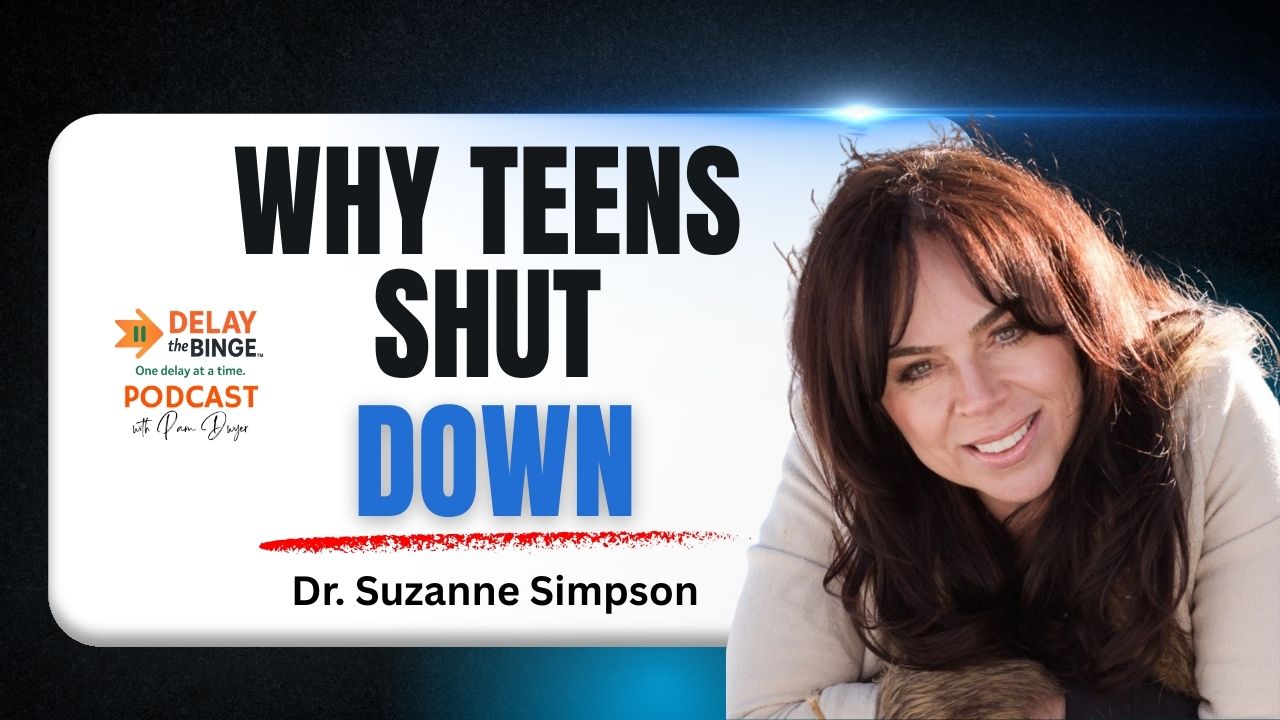
Dr. Suzanne Simpson offers a much-needed reframe: what teens need most when anxiety rises is not more pressure, but more safety, more understanding, and more connection. That shift changes the entire conversation.
Her message aligns beautifully with the heart of Delay the Binge™: when we pause long enough to understand the pattern instead of reacting to it, we create the possibility for healing, trust, and a different kind of response.
About Dr. Suzanne Simpson
Dr. Suzanne Simpson helps parents, educators, and caregivers better understand the emotional world of teenagers — especially when anxiety, stress, and overwhelm begin shaping behavior.
Through her teaching and content, she brings clarity to the role of emotional safety, nervous system regulation, and connection in adolescent development.
Her work equips adults with practical tools and compassionate insight so they can respond to teens in ways that build trust, reduce shame, and support healthier outcomes.
Continue the Conversation
Stay Connected with Pam
Subscribe for conversations on anxiety, behavioral patterns, Quiet Depletion™, and Delay the Binge™.
Your past does not define you, it prepares you.
Visit Delay the Binge™